
(718) 894-2110
Most insurances accepted
80-28 Cooper Ave Glendale, NY 11385
Inside each tooth lies a soft center called the dental pulp. Because of the soft nature of this substance, a crack or break in the outer layer of tooth’s enamel can cause inflammation and infection, otherwise known as pulpitis. Depending on the injury or disease causing the pulpitis, your mouth, neck or face can swell or turn red.
As with any inflammation or infection, pain is the most common symptom of pulpitis, often manifesting as significant tooth nerve pain.
Two different types of pulpitis exist:
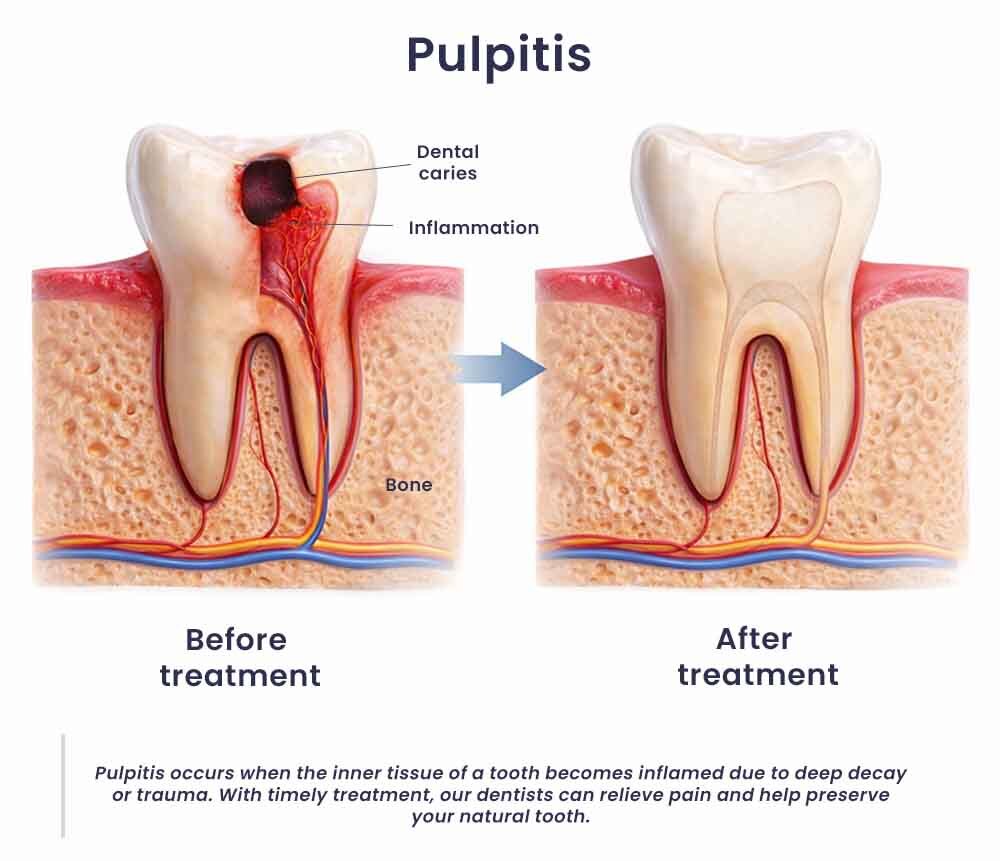
As with most conditions, several different factors may be at play here. The formation of pulpitis can be brought on by:
Untreated, pulpitis leads to abscesses, infections in your gums and in the root of your tooth, as well as the possibility of infection spreading to your skin and jaw bone. Infections left to fester can ultimately spread throughout your body, causing serious illnesses, such as sepsis.
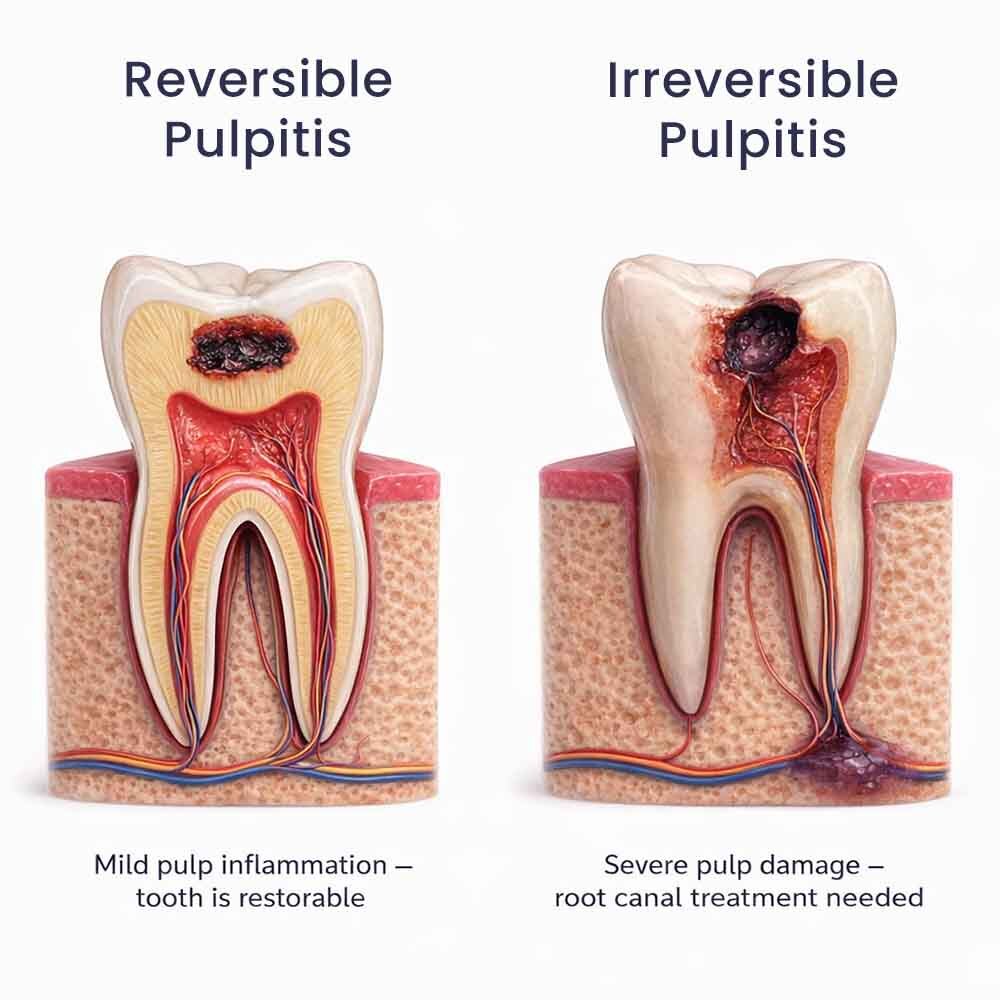
Initially, many cases of mild pulpitis cause the tooth to feel elevated in your bite due to the inflammation pressing the tooth away from your gums. Symptoms of reversible pulpitis vs. irreversible pulpitis differ. You feel pain from an inflamed pulp with reversible pulpitis, especially in the presence of extreme hot or cold temperatures.
The pain can be stabbing, sharp and quick. With irreversible pulpitis, you experience pain and pressure even in the absence of extreme temperatures. Mild changes or subtle movements often cause pain in your tooth, and it tends to linger and throb. You feel it in a wider area, especially as the infection spreads. The pain may be worse at night when you’re in a prone position.
A Glendale dentist at Atlas Park Dental employs different treatments, depending on which condition you’re suffering from. After performing an exam and taking your medical history, the dentist may use x-rays or an electric pulp tester to check if your dental pulp still responds to stimulation.
Your pulpitis treatment depends on the results of this testing and an accurate diagnosis:
The pressure and pain of pulpitis disrupts your everyday life. Your best treatment is to avoid the condition by limiting sugary drinks, using proper dental hygiene and maintaining your dental exams twice a year. This is especially important for individuals with small teeth or those prone to sensitive teeth.
To help you stay healthy, choose a local dentist like the doctors at Atlas Park Dental who recognize the symptoms and have a ready and reliable pulpitis treatment. In case of an emergency dental situation, our team is prepared to provide prompt care. Visit Atlas Park Dental to learn more.
Located in Glendale, NY, this boutique dental practice serves patients from all over Queens. Contact us if you want a convenient dentist from home or work. Atlas Park Dental is an easy commute from Forest Hills, Middle Village, Rego Park, Ridgewood, Maspeth, Woodhaven, and surrounding neighborhoods. Book your dental appointment today!

My name is Victoria Kushensky. I am a general dentist dedicated to remaining at the forefront of my field. Combining compassionate care with extensive knowledge, I offer cosmetic and general dentistry services as well as advanced root canal treatments.
I earned my Doctor of Dental Surgery (DDS) degree from the esteemed New York University College of Dentistry. Throughout my career, I have honed my skills in various dental procedures, ensuring effective treatment for each patient’s unique needs. I prioritize patient comfort and understanding, taking the time to thoroughly explain procedures and address any questions.
More about Dr. KushenskyAtlas Park Dental
80-28 Cooper Ave #207
Glendale, NY 11385
(718) 894-2110